
Genuine Ebony and Natural Boxwood
A Distinguished Revival of an Iconic Early Staunton Masterpiece
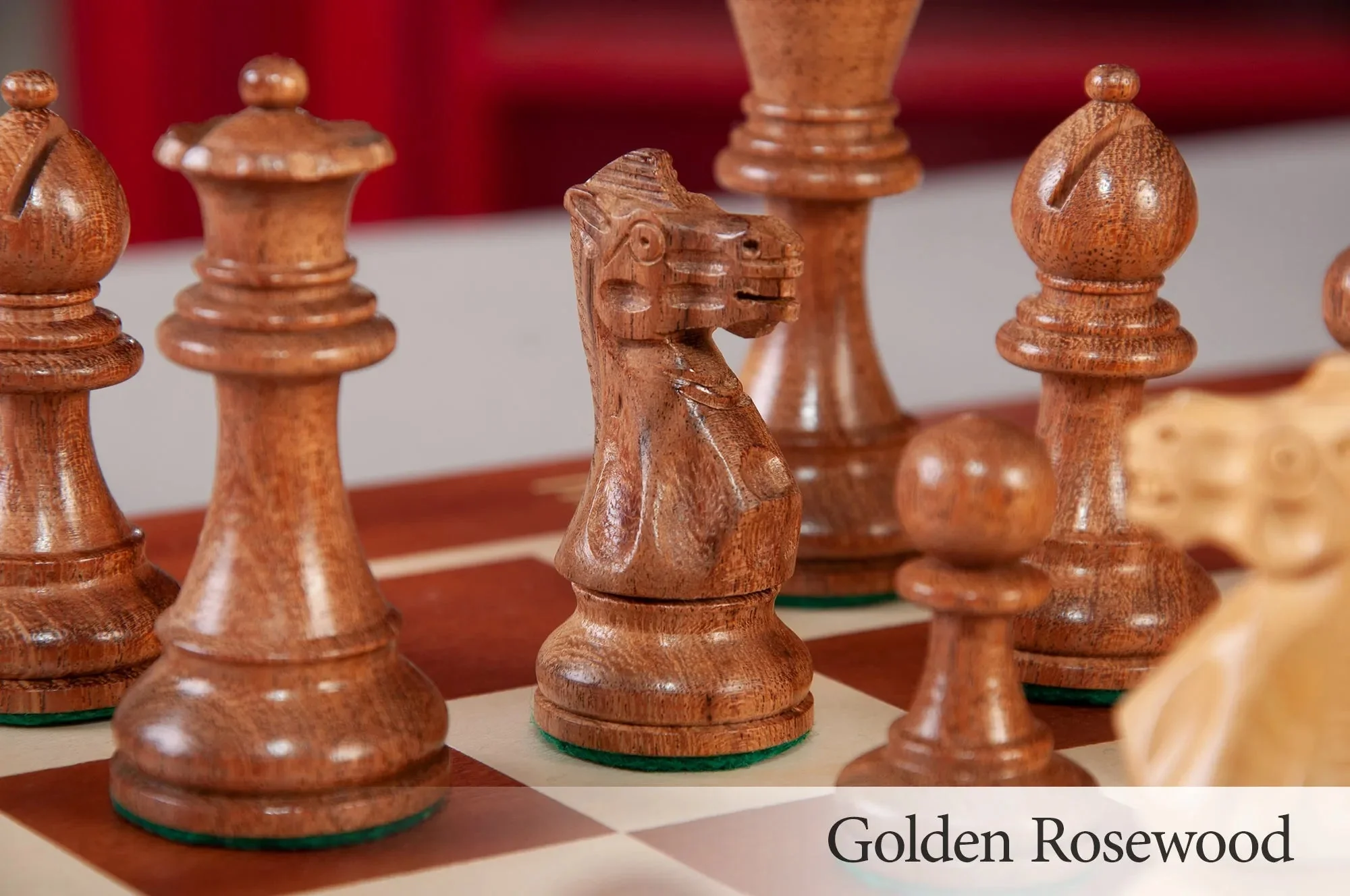
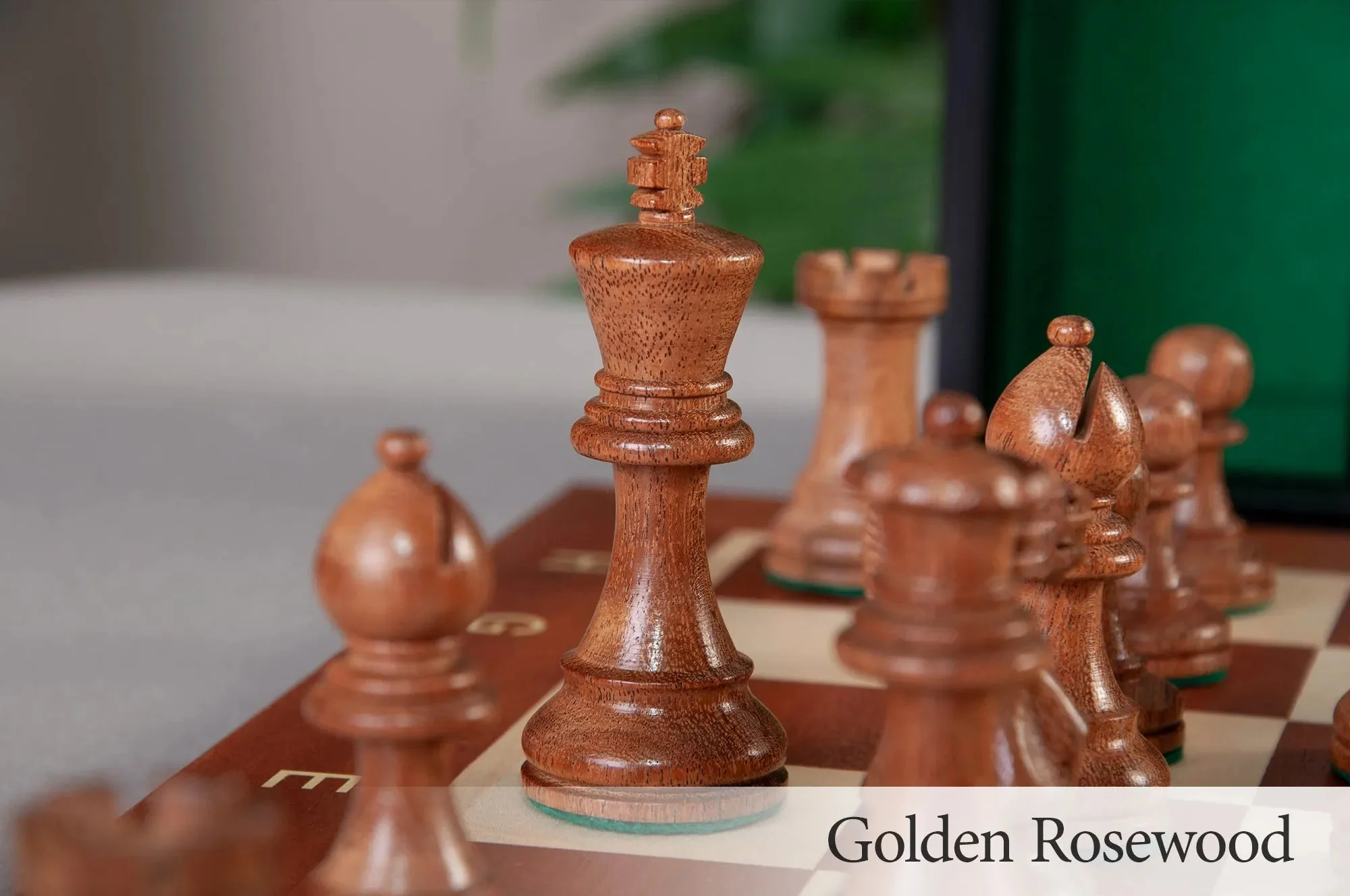
The House of Staunton is proud to present The 1852 Jaques Club Size Paulsen Chessmen, an extraordinary historical reproduction of one of the most handsome and sought-after early Jaques of London Staunton patterns. Expertly crafted from select Boxwood and rich Gabon Ebony (also available in a striking Red and Ivory Lacquered Boxwood finish), this superb set faithfully captures the distinctive character, proportions, and refined elegance of the original 1852 design. The King stands at an impressive 4-3/8" height with a 2" diameter base, representing the true “Full Club Size” standard that defined serious tournament play in the mid-19th century.
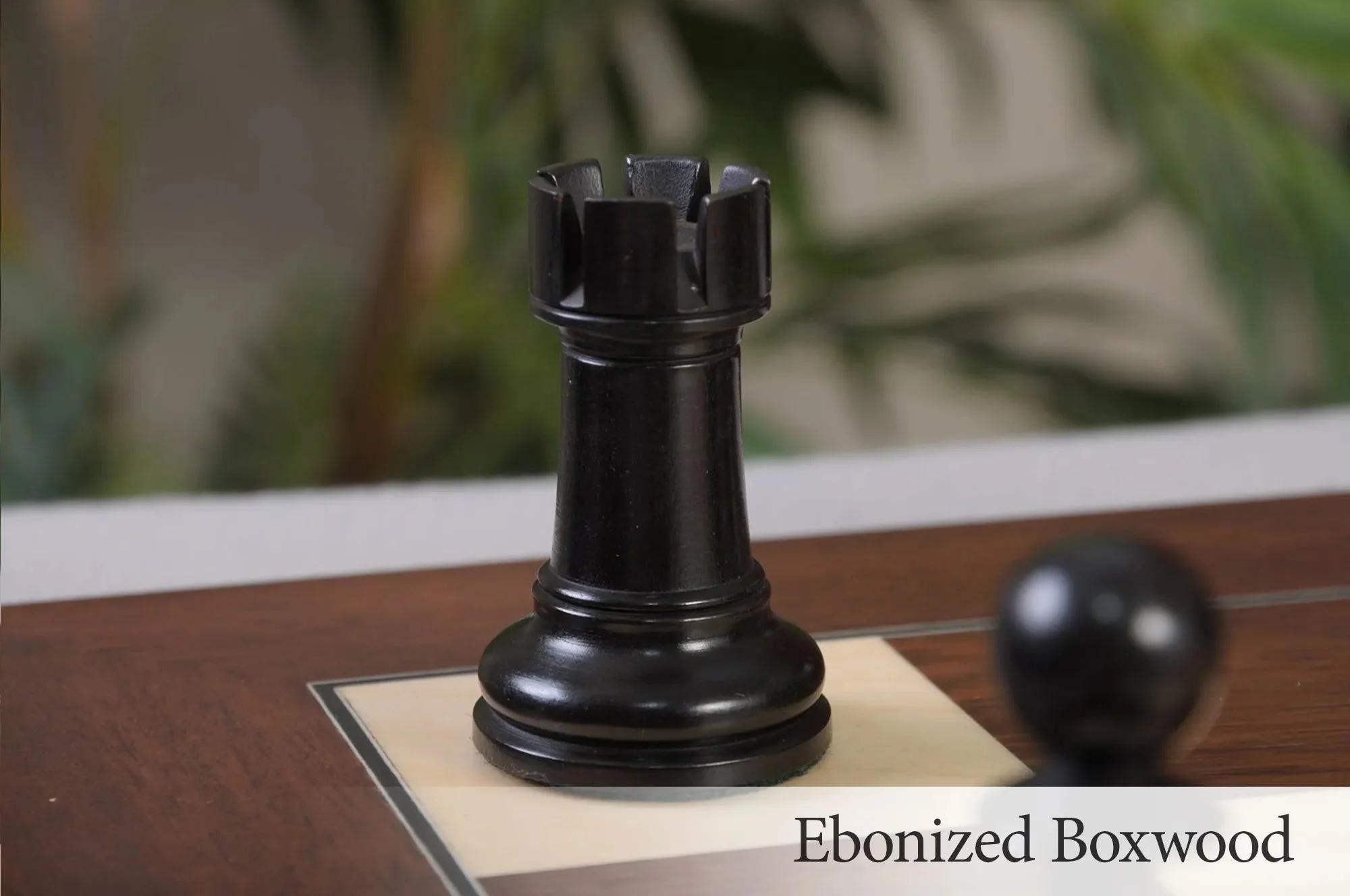
Each Chess piece is properly weighted and rests upon traditional green baize base pads, offering excellent stability and a satisfyingly solid feel in the hand. To further elevate the set, the Kings are mounted on luxurious gold-embossed Black English leather pads, while the White King is personally stamped “F.A. Camaratta” along the rim of the base - a discreet yet distinguished mark of authenticity. In keeping with period practice, the Kingside Rooks and Knights are each stamped with a crown on their summits, and every piece bears a facsimile of the original green Jaques registration sticker beneath its base. An extra pair of Queens is included to facilitate effortless Pawn promotion, a modern refinement pioneered by Frank Camaratta in 1995.
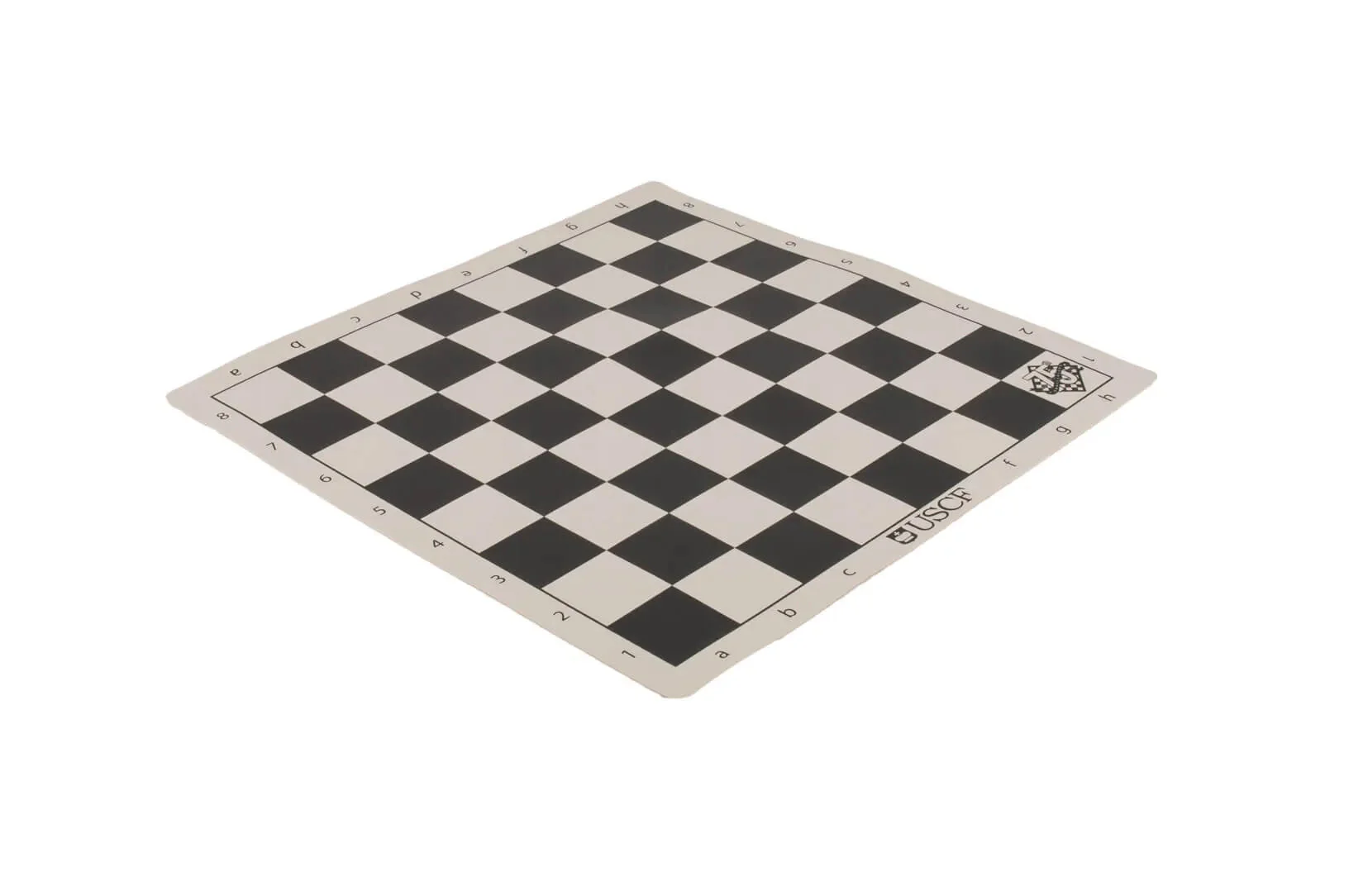
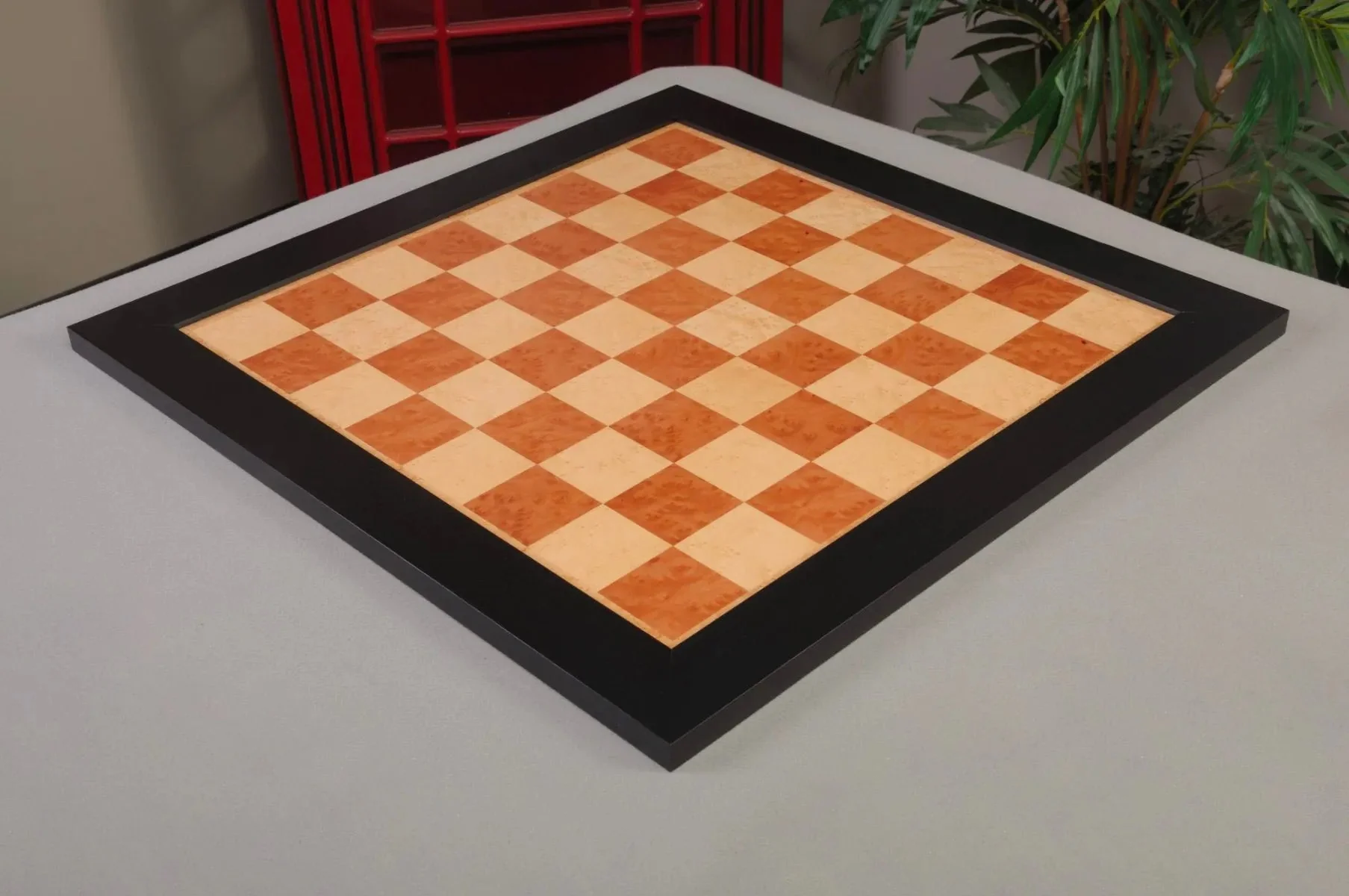
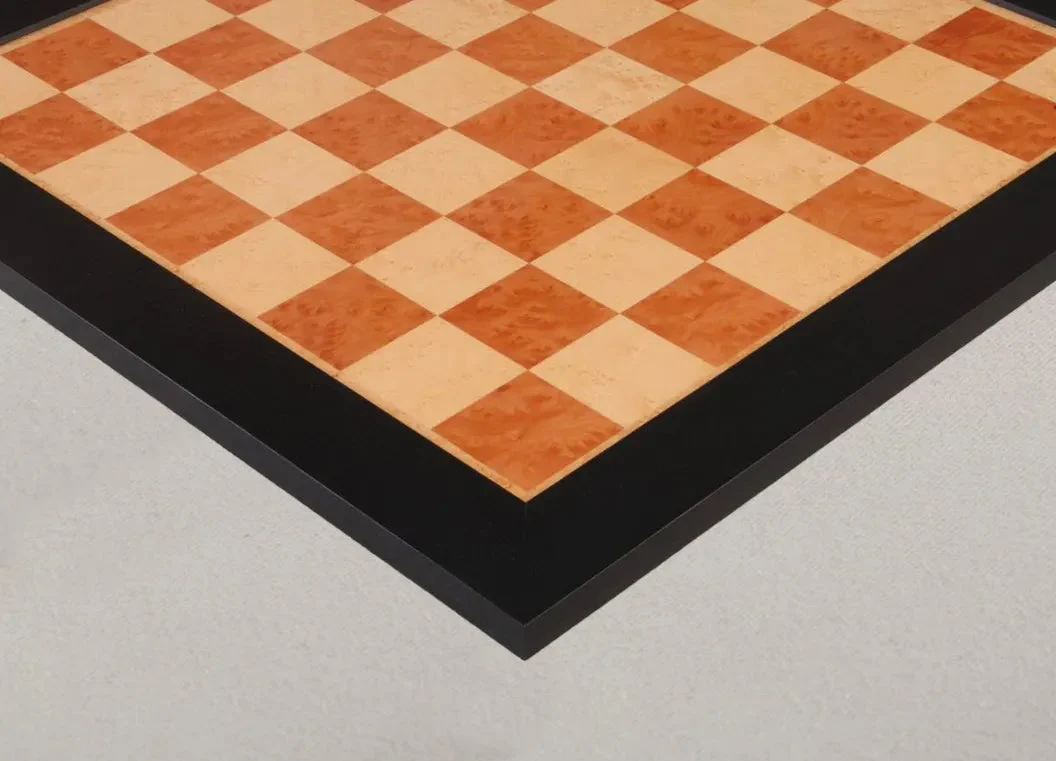
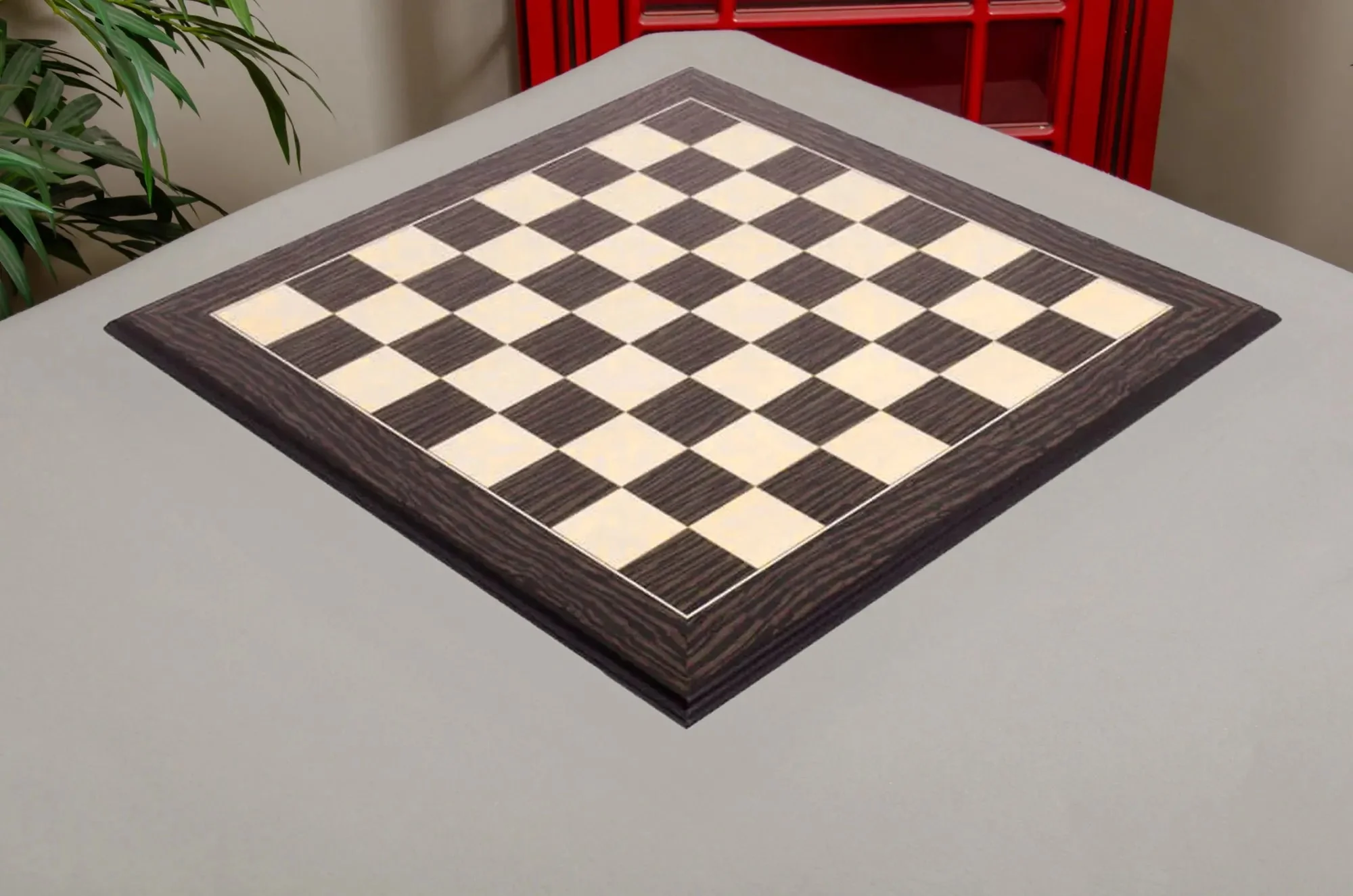
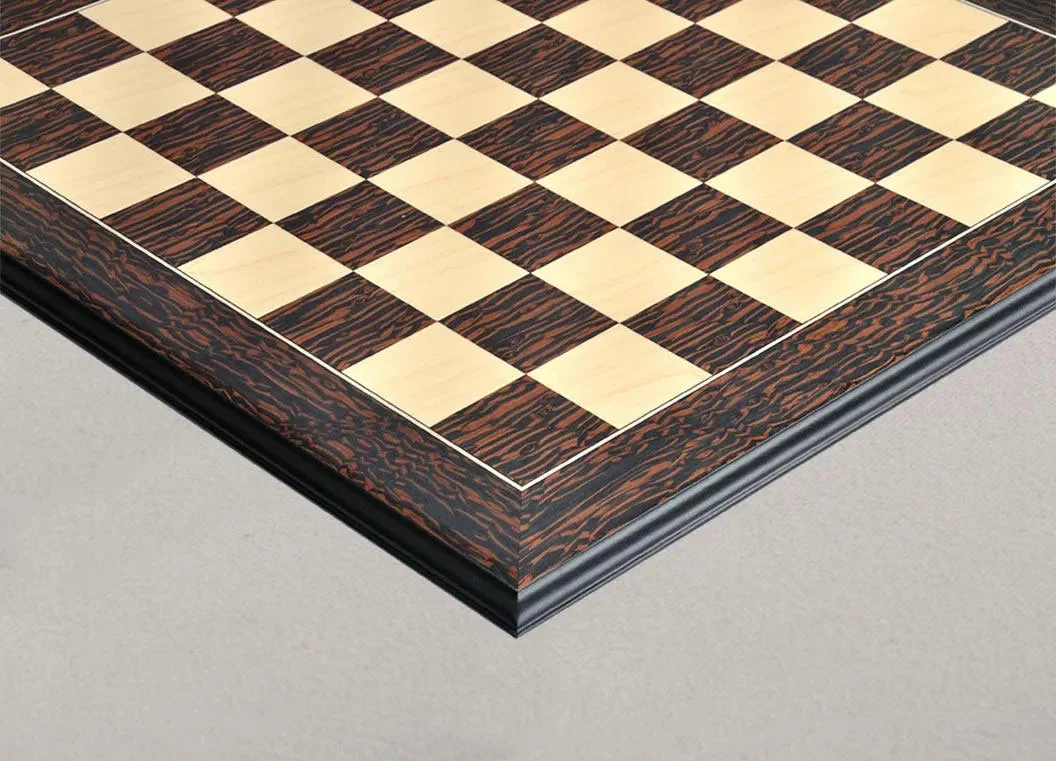
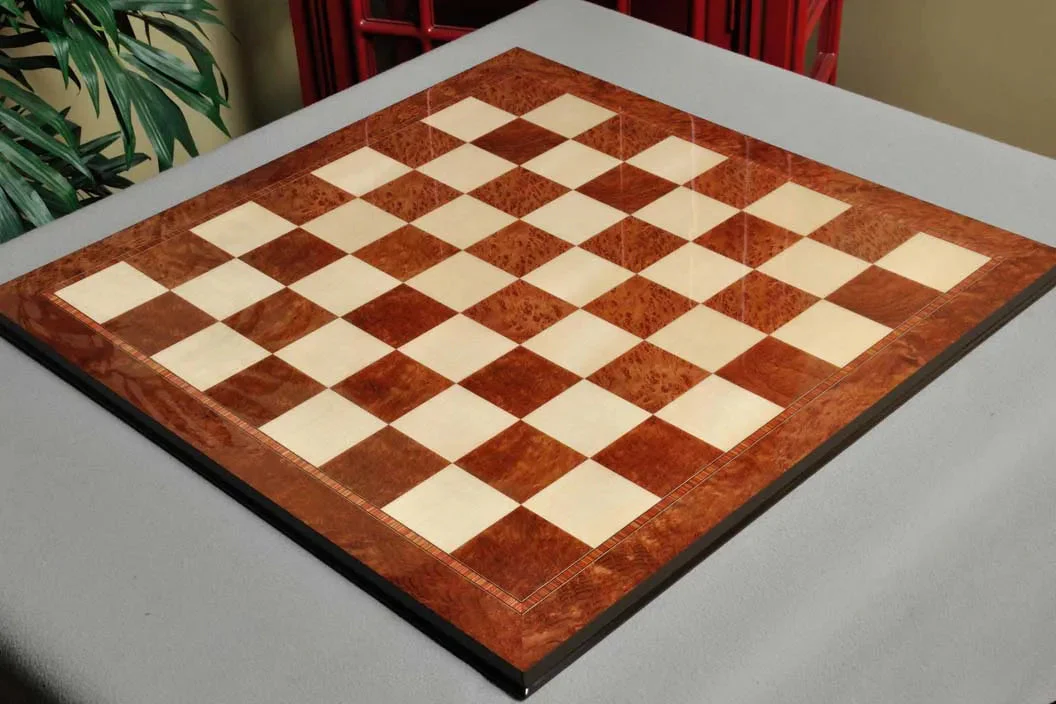
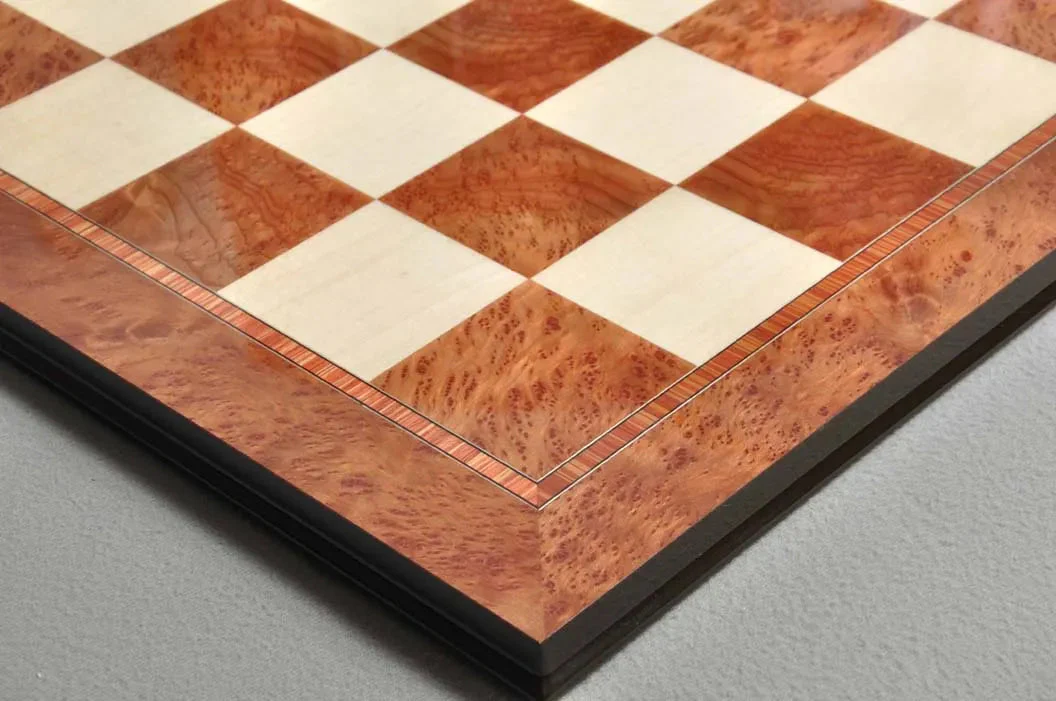
These Chessmen are new, exactingly produced, and engineered to offer both commanding board presence and practical playability. They are best paired with a Chessboard featuring 2.5" squares, which allows the robust bases, elegant silhouettes, and finely carved details - especially those of the magnificent Paulsen Knights - to be appreciated to their fullest.
A Bit of History
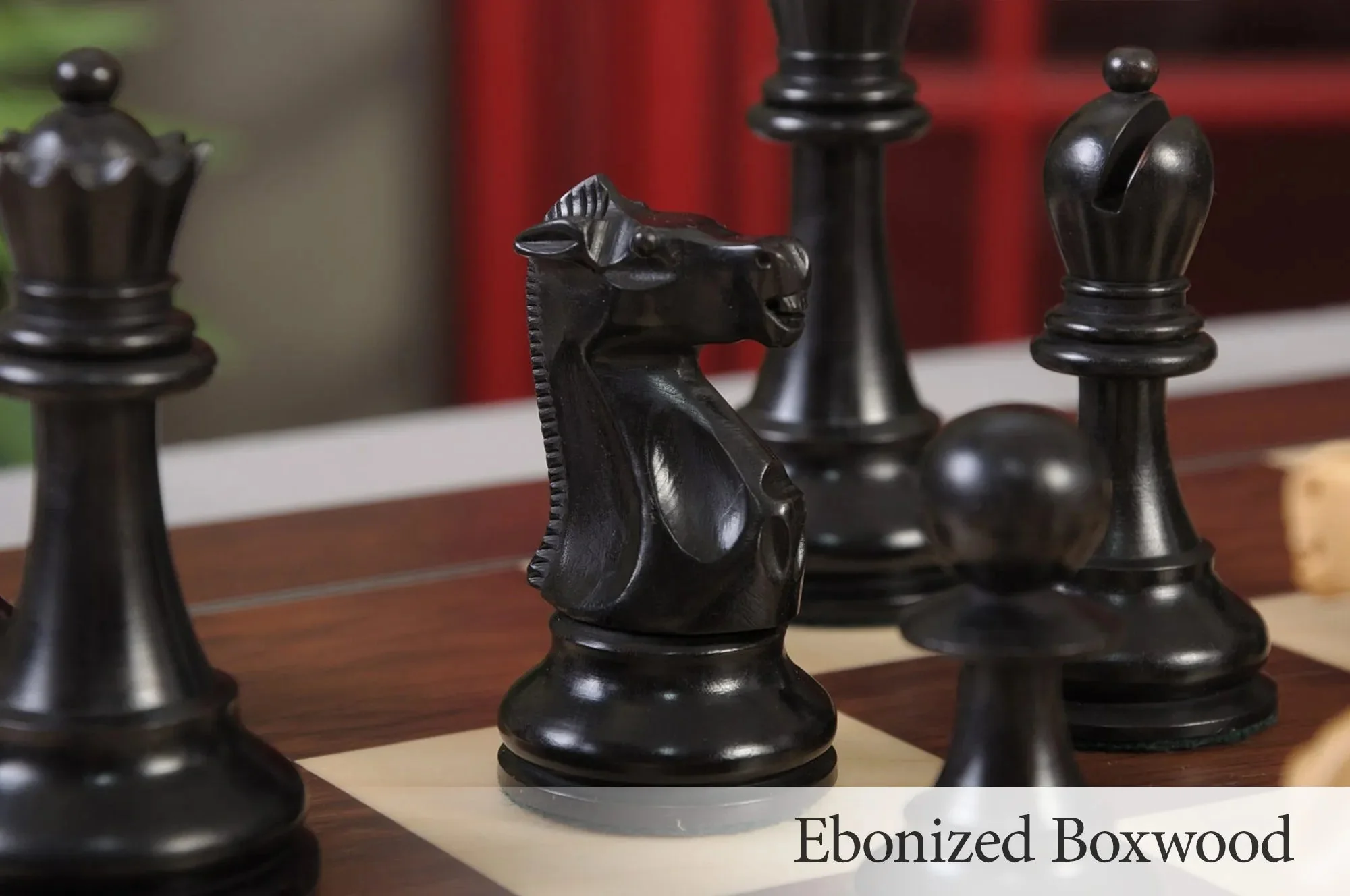
The 1852 Jaques Paulsen pattern occupies a singular place in the evolution of the Staunton chessmen, representing a refined development of the original design registered by Nathaniel Cooke in March of 1849. Among its most striking features are the superbly carved Knights, whose upright manes and graceful serpentine profiles convey both strength and poise, as well as the open-miter Bishops, whose flame-like headpieces symbolically evoke the ecclesiastical representation of Wisdom. These artistic choices, combined with the set’s harmonious proportions, have led many collectors to regard the Paulsen Chessmen as among the most attractive of all Jaques productions.
The design is named in honor of Louis Paulsen, the German master who emerged as one of the world’s strongest players during the 1860s and 1870s and a profound influence on the development of modern positional chess. A contemporary of Paul Morphy, Paulsen was renowned for his defensive resourcefulness, deep calculation, and pioneering understanding of restrained pawn structures—ideas later absorbed and expanded by Wilhelm Steinitz and celebrated by Aron Nimzowitsch. Paulsen’s name is attached to several key opening systems, including the Paulsen Variation of the Sicilian, and the so‑called “Paulsen pawns” structure remains a staple of strategic theory to this day.
In recreating The 1852 Jaques Club Size Paulsen Chessmen, The House of Staunton and Frank Camaratta have brought back to life not only a rare and beautiful Staunton pattern, but also a tangible link to the formative era of competitive chess - when design innovation, craftsmanship, and emerging chess theory converged at the very highest level.
Original: $799.00
-65%$799.00
$279.65Genuine Ebony and Natural Boxwood
A Distinguished Revival of an Iconic Early Staunton Masterpiece
The House of Staunton is proud to present The 1852 Jaques Club Size Paulsen Chessmen, an extraordinary historical reproduction of one of the most handsome and sought-after early Jaques of London Staunton patterns. Expertly crafted from select Boxwood and rich Gabon Ebony (also available in a striking Red and Ivory Lacquered Boxwood finish), this superb set faithfully captures the distinctive character, proportions, and refined elegance of the original 1852 design. The King stands at an impressive 4-3/8" height with a 2" diameter base, representing the true “Full Club Size” standard that defined serious tournament play in the mid-19th century.
Each Chess piece is properly weighted and rests upon traditional green baize base pads, offering excellent stability and a satisfyingly solid feel in the hand. To further elevate the set, the Kings are mounted on luxurious gold-embossed Black English leather pads, while the White King is personally stamped “F.A. Camaratta” along the rim of the base - a discreet yet distinguished mark of authenticity. In keeping with period practice, the Kingside Rooks and Knights are each stamped with a crown on their summits, and every piece bears a facsimile of the original green Jaques registration sticker beneath its base. An extra pair of Queens is included to facilitate effortless Pawn promotion, a modern refinement pioneered by Frank Camaratta in 1995.
These Chessmen are new, exactingly produced, and engineered to offer both commanding board presence and practical playability. They are best paired with a Chessboard featuring 2.5" squares, which allows the robust bases, elegant silhouettes, and finely carved details - especially those of the magnificent Paulsen Knights - to be appreciated to their fullest.
A Bit of History
The 1852 Jaques Paulsen pattern occupies a singular place in the evolution of the Staunton chessmen, representing a refined development of the original design registered by Nathaniel Cooke in March of 1849. Among its most striking features are the superbly carved Knights, whose upright manes and graceful serpentine profiles convey both strength and poise, as well as the open-miter Bishops, whose flame-like headpieces symbolically evoke the ecclesiastical representation of Wisdom. These artistic choices, combined with the set’s harmonious proportions, have led many collectors to regard the Paulsen Chessmen as among the most attractive of all Jaques productions.
The design is named in honor of Louis Paulsen, the German master who emerged as one of the world’s strongest players during the 1860s and 1870s and a profound influence on the development of modern positional chess. A contemporary of Paul Morphy, Paulsen was renowned for his defensive resourcefulness, deep calculation, and pioneering understanding of restrained pawn structures—ideas later absorbed and expanded by Wilhelm Steinitz and celebrated by Aron Nimzowitsch. Paulsen’s name is attached to several key opening systems, including the Paulsen Variation of the Sicilian, and the so‑called “Paulsen pawns” structure remains a staple of strategic theory to this day.
In recreating The 1852 Jaques Club Size Paulsen Chessmen, The House of Staunton and Frank Camaratta have brought back to life not only a rare and beautiful Staunton pattern, but also a tangible link to the formative era of competitive chess - when design innovation, craftsmanship, and emerging chess theory converged at the very highest level.
Product Information
Product Information
Shipping & Returns
Shipping & Returns
Description
A Distinguished Revival of an Iconic Early Staunton Masterpiece
The House of Staunton is proud to present The 1852 Jaques Club Size Paulsen Chessmen, an extraordinary historical reproduction of one of the most handsome and sought-after early Jaques of London Staunton patterns. Expertly crafted from select Boxwood and rich Gabon Ebony (also available in a striking Red and Ivory Lacquered Boxwood finish), this superb set faithfully captures the distinctive character, proportions, and refined elegance of the original 1852 design. The King stands at an impressive 4-3/8" height with a 2" diameter base, representing the true “Full Club Size” standard that defined serious tournament play in the mid-19th century.
Each Chess piece is properly weighted and rests upon traditional green baize base pads, offering excellent stability and a satisfyingly solid feel in the hand. To further elevate the set, the Kings are mounted on luxurious gold-embossed Black English leather pads, while the White King is personally stamped “F.A. Camaratta” along the rim of the base - a discreet yet distinguished mark of authenticity. In keeping with period practice, the Kingside Rooks and Knights are each stamped with a crown on their summits, and every piece bears a facsimile of the original green Jaques registration sticker beneath its base. An extra pair of Queens is included to facilitate effortless Pawn promotion, a modern refinement pioneered by Frank Camaratta in 1995.
These Chessmen are new, exactingly produced, and engineered to offer both commanding board presence and practical playability. They are best paired with a Chessboard featuring 2.5" squares, which allows the robust bases, elegant silhouettes, and finely carved details - especially those of the magnificent Paulsen Knights - to be appreciated to their fullest.
A Bit of History
The 1852 Jaques Paulsen pattern occupies a singular place in the evolution of the Staunton chessmen, representing a refined development of the original design registered by Nathaniel Cooke in March of 1849. Among its most striking features are the superbly carved Knights, whose upright manes and graceful serpentine profiles convey both strength and poise, as well as the open-miter Bishops, whose flame-like headpieces symbolically evoke the ecclesiastical representation of Wisdom. These artistic choices, combined with the set’s harmonious proportions, have led many collectors to regard the Paulsen Chessmen as among the most attractive of all Jaques productions.
The design is named in honor of Louis Paulsen, the German master who emerged as one of the world’s strongest players during the 1860s and 1870s and a profound influence on the development of modern positional chess. A contemporary of Paul Morphy, Paulsen was renowned for his defensive resourcefulness, deep calculation, and pioneering understanding of restrained pawn structures—ideas later absorbed and expanded by Wilhelm Steinitz and celebrated by Aron Nimzowitsch. Paulsen’s name is attached to several key opening systems, including the Paulsen Variation of the Sicilian, and the so‑called “Paulsen pawns” structure remains a staple of strategic theory to this day.
In recreating The 1852 Jaques Club Size Paulsen Chessmen, The House of Staunton and Frank Camaratta have brought back to life not only a rare and beautiful Staunton pattern, but also a tangible link to the formative era of competitive chess - when design innovation, craftsmanship, and emerging chess theory converged at the very highest level.