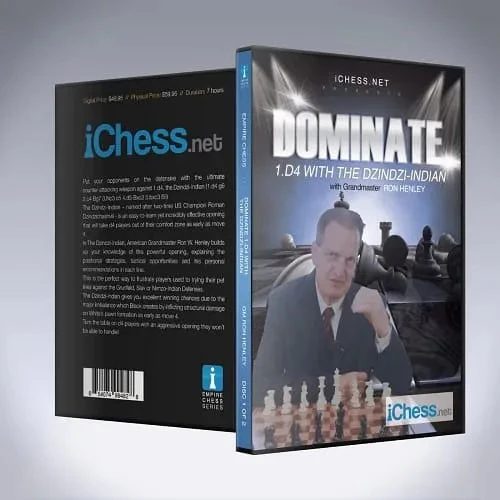
CLEARANCE - Dominate 1.d4 with The Dzindzi Indian - Ron Henley - EMPIRE CHESS
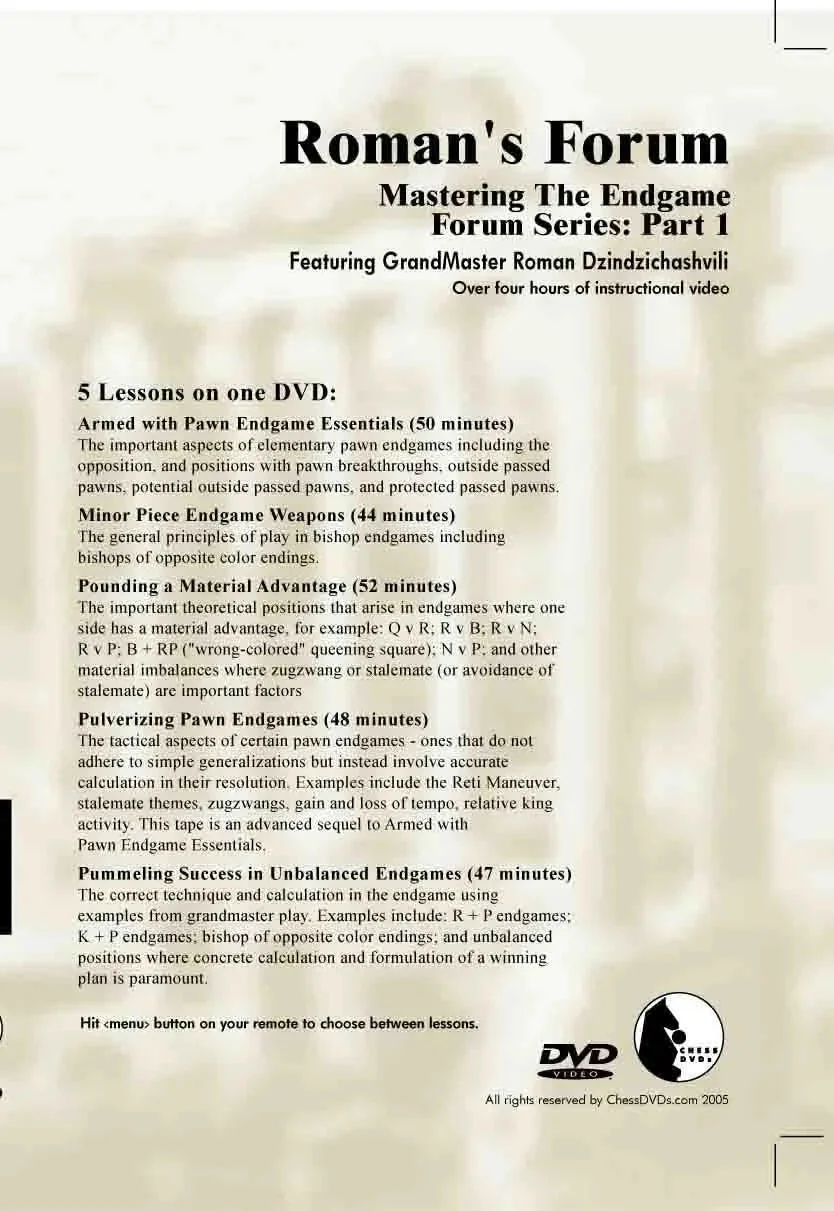
The Dzindzi Indian derives its name from the Georgian Grandmaster Roman Dzindzichashvili (jin-jee-khash-vee-lee) who emigrated via Israel to New York City in the late 1970’s and went on to win 3 US Championships.
The Dzindzi Indian is designed to give you an easy-to-learn yet powerful and incredibly effective weapon that you can employ with Black as early as move five (!) against “Queen’s Pawn” players.
At the 1998 US Amateur Team Championships in Somerset New Jersey, sat next to GM Ron Henley on board #1, was the Twelfth World Champion, Anatoly Karpov.
Imagine Ron’s and Anatoly’s surprise when a USCF Rated 1900 player whipped out the Dzindzi Indian against Karpov! It was an absolutely great choice as it was one of the few openings Anatoly did not have much experience in.
Being a true Champion, Karpov went into a deep think and then proceeded to win a very tough double-edged game. A few days later over breakfast, Grandmasters Dzindzichashvili and Henley were discussing the game. Roman demonstrated how Black could have held the position and even achieved excellent counterplay.
The Dzindi Indian is an amazing opening for a number of reasons. It is one of the very few openings in chess where tournament results actually favor Black! This is not a skewed perception but is grounded in statistical fact.
More Images
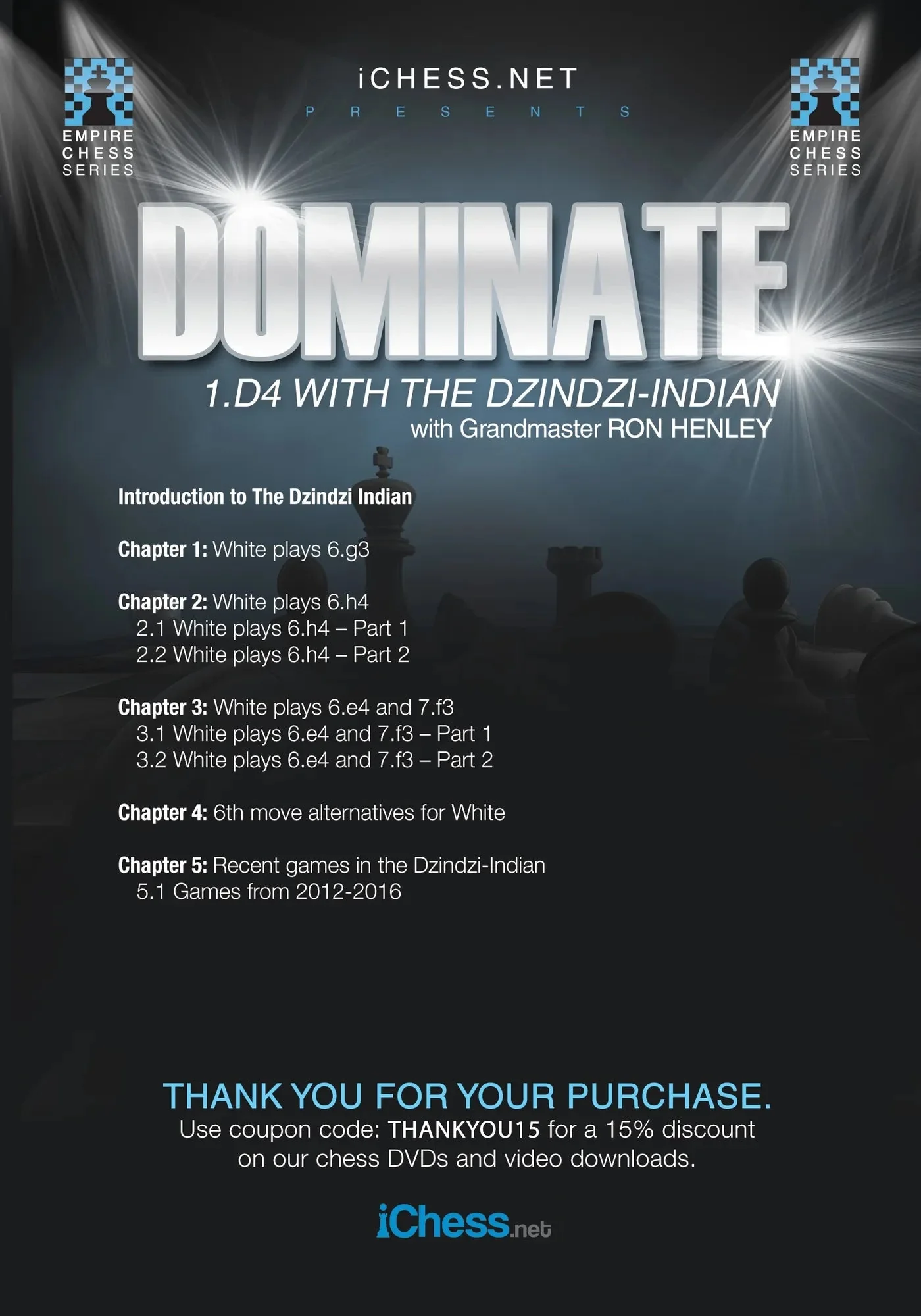
CLEARANCE - Dominate 1.d4 with The Dzindzi Indian - Ron Henley - EMPIRE CHESS
The Dzindzi Indian derives its name from the Georgian Grandmaster Roman Dzindzichashvili (jin-jee-khash-vee-lee) who emigrated via Israel to New York City in the late 1970’s and went on to win 3 US Championships.
The Dzindzi Indian is designed to give you an easy-to-learn yet powerful and incredibly effective weapon that you can employ with Black as early as move five (!) against “Queen’s Pawn” players.
At the 1998 US Amateur Team Championships in Somerset New Jersey, sat next to GM Ron Henley on board #1, was the Twelfth World Champion, Anatoly Karpov.
Imagine Ron’s and Anatoly’s surprise when a USCF Rated 1900 player whipped out the Dzindzi Indian against Karpov! It was an absolutely great choice as it was one of the few openings Anatoly did not have much experience in.
Being a true Champion, Karpov went into a deep think and then proceeded to win a very tough double-edged game. A few days later over breakfast, Grandmasters Dzindzichashvili and Henley were discussing the game. Roman demonstrated how Black could have held the position and even achieved excellent counterplay.
The Dzindi Indian is an amazing opening for a number of reasons. It is one of the very few openings in chess where tournament results actually favor Black! This is not a skewed perception but is grounded in statistical fact.
Product Information
Product Information
Shipping & Returns
Shipping & Returns
Description
The Dzindzi Indian derives its name from the Georgian Grandmaster Roman Dzindzichashvili (jin-jee-khash-vee-lee) who emigrated via Israel to New York City in the late 1970’s and went on to win 3 US Championships.
The Dzindzi Indian is designed to give you an easy-to-learn yet powerful and incredibly effective weapon that you can employ with Black as early as move five (!) against “Queen’s Pawn” players.
At the 1998 US Amateur Team Championships in Somerset New Jersey, sat next to GM Ron Henley on board #1, was the Twelfth World Champion, Anatoly Karpov.
Imagine Ron’s and Anatoly’s surprise when a USCF Rated 1900 player whipped out the Dzindzi Indian against Karpov! It was an absolutely great choice as it was one of the few openings Anatoly did not have much experience in.
Being a true Champion, Karpov went into a deep think and then proceeded to win a very tough double-edged game. A few days later over breakfast, Grandmasters Dzindzichashvili and Henley were discussing the game. Roman demonstrated how Black could have held the position and even achieved excellent counterplay.
The Dzindi Indian is an amazing opening for a number of reasons. It is one of the very few openings in chess where tournament results actually favor Black! This is not a skewed perception but is grounded in statistical fact.